
What is Neurographica?
It is a very cool and effective personal development technique that allows you to quickly work through what is blocking you.
Why did I write "cool"? Because instead of digging into difficult emotions, you work through them lightly—by drawing.
So how does it work, you ask?
Let me explain!
Your mind has something like an "operating system"—just like your phone or computer. This operating system consists of your beliefs, which you acquired as a child, your worldview, fears, assumptions, traumas, and stories. Based on this system, you see the world and yourself, obstacles and opportunities, and your future.
In other words, you see everything through the FILTERS of your mind!
And if it "recognizes" something it considers a threat, unfortunately, it will stop you, sabotage you, and not allow you to reach for it!
And this is where Neurographica comes to the rescue!
It helps transform blockages, fears, and beliefs. It dissolves what stands in the way of your desires and creates a new—SUPPORTIVE SYSTEM IN YOUR MIND!
Cool, right?
How does it work practically? You choose a topic you want to change, describe it, draw it, and then using neurographic tools, make visual changes to it. These changes, along with the plasticity of your brain, cause changes in how you see this issue, changing beliefs and emotions surrounding the topic.
Start working with me, and you'll see for yourself.
Below is a more scientific explanation of a few aspects related to neurographics.
Neurographica is the language of our neurons. The first part of the word (neuro) connects it to neurons, the nervous system, and consciousness. Graphics is the creative element, linking to visualization and artistic arts. As they say, it's a combination of pleasure and utility.
The basis of neurographics includes psychological approaches, such as Gestalt Therapy and Kurt Lewin's theory. There are boundaries of personality and its existence, and everything else is unknown. Neurographica operates in the field of personality, the environment, and the unknown. It also relies on Jung's theory of geometric symbols: the circle, triangle, square, and line—all these symbols interact with our deep psyche. In neurographics, there is a reference to archetypes using symbols. Therefore, the artistic approach, Kandinsky's theory, and the contribution of Poles on how data reflects in our emotional and intellectual field remain important. Ultimately, through neuro-linguistic programming (NLP), neurographics allows for simulating and creating reality.
You can read about the creator of Neurographica below.
What is Neurographica and its basics?
The foundation of the method is the neurographic line: it is spontaneous and does not repeat at any point along its path. At the same time, precise motor skills of the hands are engaged, linked to the brain's neural networks. For this reason, the neurographic drawing process can create new neural connections in the brain, thus changing the thought process.
Neurografika combines a set of psychological methods with several graphic techniques. At first glance, such graphics appear abstract, but they are based on an algorithm; a neurographic drawing is directly related to the projected reality image. Neurografika helps restore order in life and deal not only with problems but also with the causes that led to them. This method is particularly useful for project managers, entrepreneurs, coaches, managers, teachers, and psychologists.
When drawing, use markers, felt-tip pens, and crayons in various colors.
Apart from engaging in a very creative and enjoyable activity, drawing Neurografika has many benefits:
- Transforms negative emotions into positive ones;
- Eliminates internal conflicts;
- Helps release limiting blockages;
- Helps relieve stress and tension;
- Transforms reality;
- Helps discover non-standard approaches to problem-solving in professional and financial spheres, in career and business;
- Builds relationships with loved ones, colleagues, friends;
- This practice helps make decisions, get answers to questions, solve problems, fulfill desires;
- Helps get rid of complexes, psychological traumas;
- Releases inner potential;
Neurographica is an intense experience of one's emotions and feelings, not a form of therapy. By purchasing access to my courses/classes, you confirm that you are willing and ready to confront your mental states, taking full responsibility for them.
If you are currently receiving psychotherapy, have recently completed therapy, or plan to undergo it soon, I recommend consulting with a doctor or therapist before signing up for classes to ensure that your participation is appropriate at this stage.
Do you know who created Neurographica?
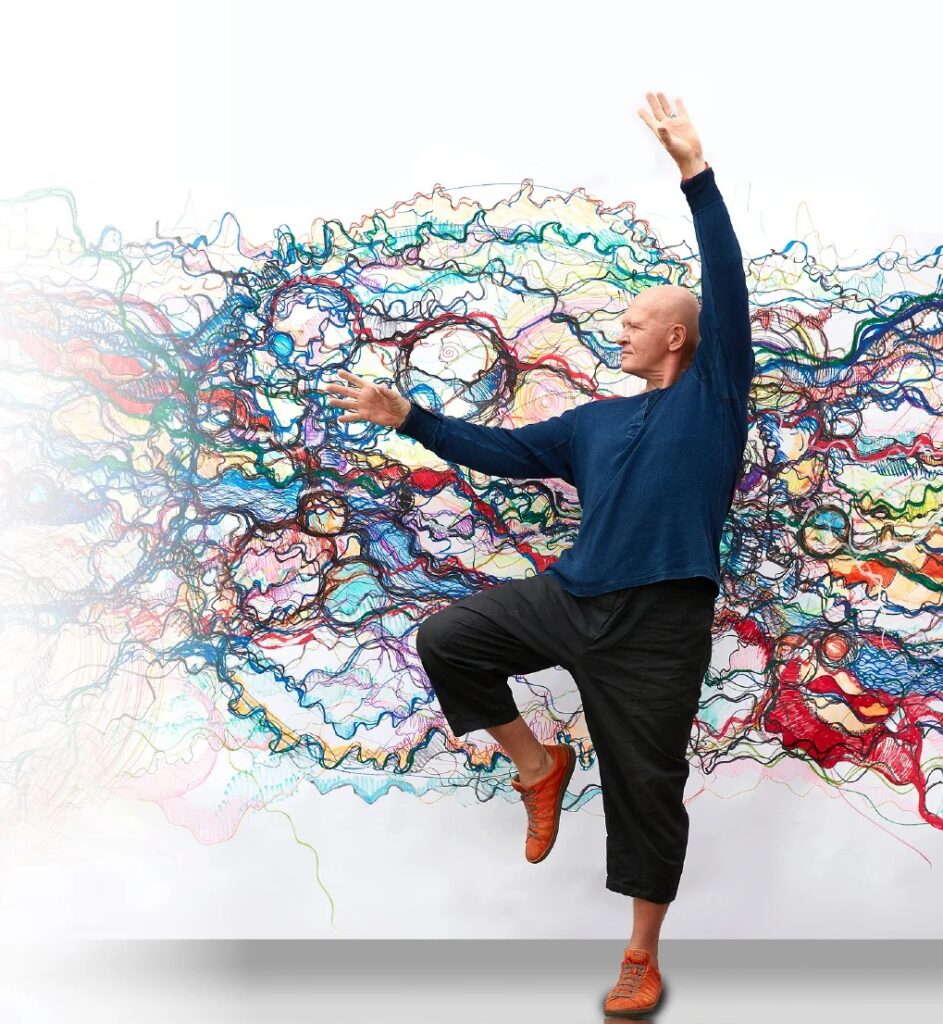
Pavel Piskarev
Its creator spent years searching for a tool that would effectively help people. He conducted research, analyzed, and worked with people, resulting in Neurografika.
Piskarev holds a doctorate in psychological sciences. He is a professor and, interestingly, an inventor with over 40 proprietary patents.
His personal credo—Everything is possible! Sounds great, doesn't it?
I will quote his words because they resonate with me:
"CV is life written in a few lines.
I believe that in one's work, one must be completely honest and authentic in what one does. Therefore, every education, especially in sociology and psychology, must be linked with broad practice in working with people, periodically stepping beyond the boundaries of one's profession into other contexts of action."